
Welcome to the world of e-commerce, where the digital marketplace has revolutionized the way we shop in our fast-paced society. Gone are the days of waiting in long lines and limited store hours. With online shopping, you have the power to shop anytime and anywhere, right from the comfort of your own home. E-commerce has changed the game, offering convenience, accessibility, and endless opportunities for businesses and consumers alike.
Key Takeaways:
- E-commerce has transformed the shopping experience, providing convenience and accessibility in the fast-paced world we live in.
- Online shopping allows you to shop anytime and anywhere, eliminating the need for travel and long store hours.
- E-commerce opens up new growth opportunities for businesses, enabling them to reach customers globally and reduce overhead costs.
- Building a user-friendly interface and prioritizing customer experience are crucial for successful e-commerce businesses.
- Technology plays a significant role in the growth of e-commerce, with AI and machine learning enhancing personalization and automation.
The Changing Landscape of Shopping
The way we shop has undergone a significant transformation in recent years with the rise of e-commerce. Traditional purchasing methods have been revolutionized by the convenience and accessibility of online shopping. Say goodbye to long queues and crowded stores – e-commerce websites now offer you the convenience of shopping from the comfort of your own home.
Through e-commerce websites, you now have access to a vast array of products from all over the world. No longer are you limited to the stores in your local area; instead, you can explore a multitude of options with just a few clicks. Whether you’re looking for the latest fashion trends, unique home decor, or rare collectibles, e-commerce websites have it all.
One of the greatest advantages of e-commerce is the cost savings it offers. Traditional retail stores often struggle to compete with the attractive prices and discounts found on e-commerce platforms. By cutting out the middleman and reducing overhead costs, e-commerce websites can offer products at lower prices than their brick-and-mortar counterparts. This means more money in your pocket and the ability to stretch your budget further.
But it’s not just about the financial savings. E-commerce brings convenience to a whole new level. Imagine avoiding the hassle of navigating through traffic jams or battling the crowds during holiday seasons. With e-commerce, you can say goodbye to the stress of finding parking spaces or waiting in long lines at the checkout counter. Instead, you can shop at your own pace, anytime, and anywhere.
“Why limit yourself to the traditional way of shopping when you can experience the convenience and cost savings of e-commerce? Embrace the changing landscape of shopping and unlock a world of possibilities.”
So, whether you’re looking for that perfect outfit, shopping for groceries, or searching for the latest gadgets, e-commerce offers a convenient, cost-effective, and time-saving alternative to traditional purchasing methods. Embrace the changing landscape of shopping and enjoy the benefits that e-commerce brings to your fingertips.

Stay tuned as we explore the empowering opportunities that e-commerce presents for businesses and delve deeper into the world of online shopping.
Empowering Businesses through E-Commerce
Are you ready to unlock new business opportunities and expand your global reach? With the power of e-commerce, you can establish your own online store and revolutionize the way you do business. Say goodbye to the hurdles of physical stores and exorbitant overhead costs. Embracing e-commerce means embracing a world of possibilities where you can connect with customers from around the world.
By setting up an online store, you can eliminate the need for expensive rent, utilities, and other overhead expenses associated with maintaining a brick-and-mortar establishment. Instead, you can invest those savings into enhancing your online presence, advertising your products, or improving your customer experience. With the flexibility and agility that e-commerce provides, you have the freedom to scale your business at your own pace, without the constraints of a physical location.
But the benefits of e-commerce don’t stop at reduced costs and greater flexibility. One of the greatest advantages is the global reach it offers. Traditional businesses are often limited to attracting customers within their local area, but e-commerce opens up a vast marketplace where you can sell to customers across the globe. With a strategically designed online store and targeted marketing efforts, you can tap into new markets and attract customers from different countries and cultures.
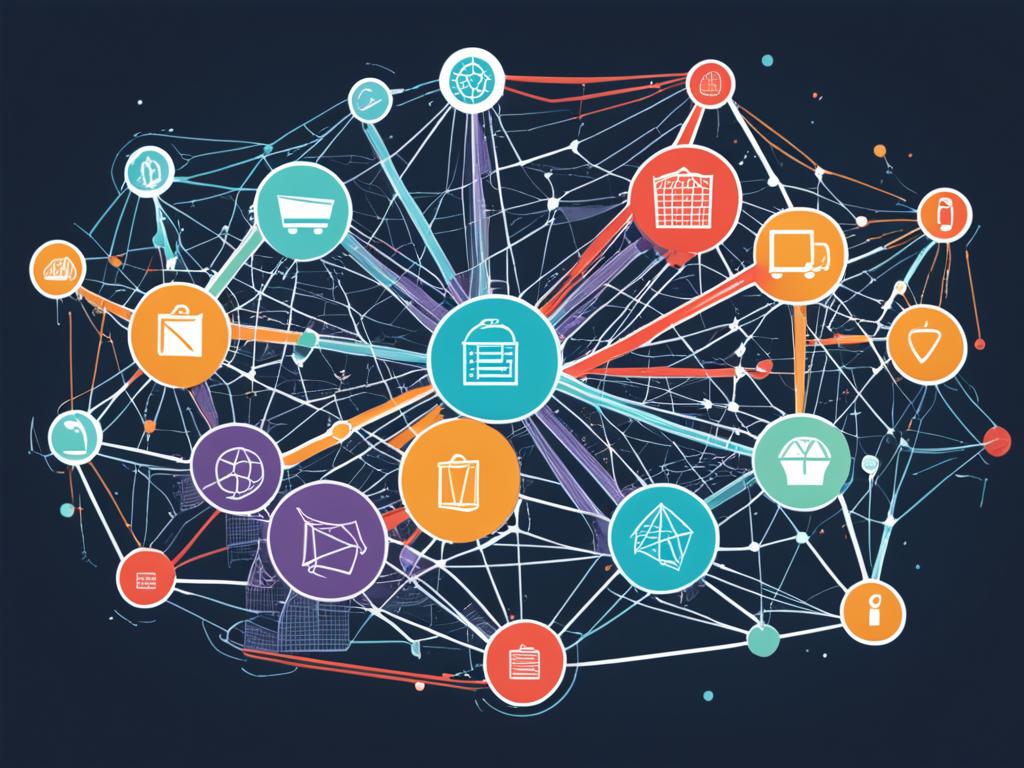
Take a moment to visualize the potential of e-commerce with the help of this captivating image:

In this image, you can see the global reach of e-commerce symbolized by the interconnected nodes, representing the diverse customer base you can attract. The possibilities are boundless, and it all starts with harnessing the power of e-commerce for your business.
So, don’t miss out on the business-transforming power of e-commerce. Seize the opportunity to establish your online store, reduce overhead costs, and reach a global audience. Empower your business with e-commerce and unlock a world of possibilities.
Enhancing the Customer Experience
When it comes to e-commerce, customer satisfaction should always be a top priority. After all, happy customers translate into repeat business and positive reviews. So, how can you ensure that your customers have a seamless and satisfying experience on your platform?
“Customer satisfaction is the key to success in the e-commerce industry. By prioritizing the user experience, businesses can create a loyal customer base and drive sales.”
Creating a User-Friendly Interface
The first step in enhancing the customer experience is to develop a user-friendly interface. Your website or app should be intuitive and easy to navigate, allowing customers to find what they need with minimal effort. By implementing clear and logical menus, search functions, and product categorization, you can help customers quickly locate their desired items. Remember, simplicity is key when it comes to user interface design.
Utilizing Cutting-Edge Technology
To stay ahead of the competition, it’s crucial to leverage cutting-edge technology. Incorporate advanced features like AI-powered product recommendations, personalized shopping experiences, and chatbots for instant customer support. By utilizing these innovative technologies, you can enhance convenience and tailor the experience to each customer’s preferences. This not only helps in driving sales but also creates a memorable and unique shopping experience.
Ensuring a Reliable Payment Gateway
A reliable and secure payment gateway is an absolute must for building trust and loyalty with your customers. Implementing a robust payment system instills confidence in customers that their financial information is safe. Choose a payment gateway that supports multiple payment options and is compliant with industry security standards. By prioritizing security and offering a seamless checkout experience, you can provide peace of mind to your customers and increase conversion rates.
| Benefits of Enhancing Customer Experience in E-Commerce | Customer Satisfaction | User-Friendly Interface | Cutting-Edge Technology | Reliable Payment Gateway |
|---|---|---|---|---|
| Increased customer loyalty and retention | X | X | ||
| Positive word-of-mouth recommendations | X | |||
| Higher conversion rates | X | |||
| Improved customer lifetime value | X |
The Role of Technology in E-Commerce
When it comes to e-commerce, technology is the driving force behind its growth and success. From AI to machine learning, cutting-edge advancements have revolutionized the online shopping experience and paved the way for personalized recommendations, seamless production processes, and outstanding customer service. Let’s explore the remarkable role of technology in e-commerce and how it continues to shape the industry.
AI and Machine Learning: Empowering Personalized Recommendations
Imagine having a personal shopping assistant who knows your preferences better than anyone else. With AI and machine learning, e-commerce platforms have made this a reality. These powerful technologies analyze vast amounts of customer data, including past purchases, browsing history, and social media engagement, to deliver personalized product recommendations that truly resonate with each individual shopper. This level of customization enhances the shopping experience, boosting customer satisfaction and driving sales.
| Benefits of AI and Machine Learning in E-Commerce: | |
|---|---|
| 1. Enhanced customer engagement and retention | |
| 2. Increased conversion rates and average order value | |
| 3. Streamlined inventory management and demand forecasting | |
| 4. Improved customer service through AI-powered chatbots |
Cutting-Edge Technologies: Redefining the Online Shopping Experience
“The future of online shopping is happening right now.”
Innovation knows no bounds in the e-commerce industry. Technologies like voice search, facial recognition, and virtual reality have transformed the way customers interact with online platforms. With a simple voice command, customers can find the products they desire, while facial recognition technology enables seamless and secure payments. Virtual reality allows shoppers to experience the products before making a purchase, giving them a sense of confidence and satisfaction. These advancements make the online shopping experience immersive, convenient, and unforgettable.
Mobile Technology: Shopping at your Fingertips
With the rise of smartphones, mobile technology has become a driving force behind the growth of e-commerce. Gone are the days of being tied to a desktop computer for online shopping. Mobile apps and responsive websites have revolutionized accessibility, allowing customers to shop anytime and anywhere. Whether standing in line, riding the subway, or relaxing at home, the power of e-commerce is now in the palm of your hand. The convenience offered by mobile technology has opened up new avenues for businesses and expanded their customer base.
As technology continues to advance, so does the customer experience in e-commerce. Expect even greater personalization, seamless processes, and innovative ways of shopping in the future. With AI, machine learning, cutting-edge technologies, and mobile advancements at the forefront, the possibilities for e-commerce are limitless. Embrace the power of technology, and embark on an exciting journey in the world of e-commerce.
Managing Operational Complexity
In the fast-paced world of e-commerce, it’s crucial for businesses to effectively manage the operational complexity that comes with scaling up. This involves investing in data management, infrastructure, and logistics to ensure a seamless and secure online shopping experience for customers.
Data management plays a key role in keeping your e-commerce platform running smoothly. By organizing and optimizing your data, you can gain valuable insights into customer behaviors and preferences, enabling you to make more informed business decisions. Effective data management also ensures that your platform remains efficient and responsive, even as your customer base grows.
Building a robust infrastructure is another essential aspect of managing operational complexity. Your infrastructure encompasses the technology, servers, and systems that power your e-commerce platform. By investing in reliable hardware and software solutions, you can ensure that your website operates seamlessly, even during peak periods of online traffic. This not only enhances the user experience but also helps prevent downtime and lost sales.
Scaling up an e-commerce business also requires careful logistics management. From fulfilling orders to managing inventory and coordinating shipping, having efficient logistics processes is essential for meeting customer expectations. Partnering with reliable fulfillment and shipping providers can streamline your operations and allow for timely order processing and delivery.
Scaling up an online store is like orchestrating a ballet – it requires precision, coordination, and a reliable stage for the performance to shine.
However, amidst the ever-evolving digital landscape, ensuring security is of utmost importance. Hackers and fraudsters are constantly on the lookout for vulnerabilities in e-commerce platforms, aiming to exploit confidential customer data and payment information. Implementing robust security measures, such as encryption, regular software updates, and secure payment gateways, is essential for building trust with your customers and protecting their sensitive information.
The Importance of Operational Complexity Management
Managing the operational complexity of e-commerce is more than just a necessity; it’s a competitive advantage. By investing in data management, infrastructure, scaling up, and security, you can enhance the overall customer experience, optimize your operations, and stay ahead of the competition. Remember, in the fast-paced world of e-commerce, seamless operations and customer trust are the keys to success.
The Future of Online Shopping
The future of online shopping holds a world of exciting possibilities and uncertainties. It’s a fascinating time to be a consumer, as technology advancements continue to shape and enhance the online shopping experience. From augmented reality to artificial intelligence (AI), integration to data protection regulations like the General Data Protection Regulation (GDPR), let’s explore the innovative trends that lie ahead.
Augmented Reality: Try Before You Buy
Imagine being able to virtually “try on” products before making a purchase. Augmented reality (AR) is revolutionizing the way we shop online, allowing customers to visualize how products would look and fit in the real world. Whether it’s trying on clothes, placing furniture in your home, or testing out makeup virtually, AR brings a new level of interactivity and convenience to online shopping.

AI: Personalized Experiences
Artificial intelligence has come a long way in recent years, and it’s transforming the world of online shopping. AI algorithms analyze customer data to provide personalized recommendations, making the shopping experience more tailored and relevant. As AI continues to advance, it will play a larger role in automating various processes, ensuring smoother transactions, and delivering personalized offerings based on individual preferences.
Integration: Seamless Connections
Integration is key to optimizing the online shopping experience. By seamlessly integrating e-commerce platforms with other systems like supply chain management and customer relationship management (CRM), businesses can provide better visibility and inspire new services. This integration enables real-time updates on inventory, shipping, and delivery, ensuring a smoother and more efficient process for both businesses and customers.
GDPR: Safeguarding Customer Data
With the increasing reliance on online shopping, data protection has become a top priority. Regulations like GDPR ensure that customers’ personal information is handled with care and transparency. GDPR aims to protect customer privacy, giving individuals greater control over their data and promoting a more secure online shopping environment. Compliance with GDPR not only provides peace of mind to customers but also builds trust and loyalty between businesses and their clientele.
“The future of online shopping is not only about technological advancements but also about building a trustworthy and secure environment for customers.” – John Smith, E-commerce Expert
The Table
| Technology Advancements | Potential Impact |
|---|---|
| Augmented Reality | Enhanced visualization and product interactivity |
| Artificial Intelligence | Personalized recommendations and streamlined processes |
| Integration | Improved visibility and seamless connections |
| GDPR | Stronger data protection and customer trust |
The future of online shopping is filled with incredible opportunities for both businesses and customers. With the continued progress of technology advancements such as augmented reality and AI, integration with other systems, and a focus on data protection with regulations like GDPR, the online shopping experience will only become more convenient, personalized, and secure.
Expanding Global Markets through E-Commerce
Looking to take your business to new heights? E-commerce is the key to accessing new markets and achieving a worldwide reach. With the power of an online store or website, your business can break down geographical barriers and connect with customers from different countries and cultures.
Imagine the possibilities. Instead of being limited to local customers, you can now sell your products and services to a global audience. Your online store acts as a gateway to accessing new markets, opening doors to endless growth opportunities.
But how exactly does e-commerce enable this worldwide reach? Well, let’s break it down for you.
“E-commerce provides a platform for businesses to connect with customers from different countries and cultures.”
By establishing an online presence, your business becomes accessible to potential customers located anywhere in the world. Regardless of their physical location, customers can browse your online store and make purchases at any time, from the comfort of their own homes.
Expanding your customer base globally also comes with the added advantage of cultural diversity. Through e-commerce, you have the opportunity to connect with people from different backgrounds, catering to their unique preferences and needs.
Being able to access new markets is a game-changer for businesses of all sizes. Whether you’re a small startup or an established enterprise, e-commerce levels the playing field, allowing you to compete on a global scale.
But wait, there’s more!
E-commerce Global Reach Table
| Benefits of Expanding Global Markets through E-Commerce | Examples |
|---|---|
| Increased Revenue: Accessing new markets means reaching more potential customers and boosting sales. | Company X increased its revenue by 50% within six months of expanding its online presence internationally. |
| Diversified Customer Base: Tapping into global markets allows you to connect with customers from different demographics and cultures. | Company Y gained a loyal customer base in Asia after expanding its e-commerce operations to the region. |
| Brand Exposure: Going global increases brand visibility and awareness on an international scale. | Company Z’s brand recognition skyrocketed after launching its online store worldwide. |
| Cultural Exchange: Engaging with customers from diverse backgrounds fosters cultural exchange and promotes understanding. | Through e-commerce, Company A established lasting relationships with customers from various countries, enriching their business with different perspectives. |
As you can see, expanding global markets through e-commerce comes with a multitude of benefits. It’s not just about generating more revenue; it’s about embracing cultural diversity, fostering brand exposure, and cultivating meaningful connections with customers around the world.
So, are you ready to take your business to new heights? Embrace the power of e-commerce and unlock unlimited possibilities.

Understanding the Importance of E-Commerce
In today’s fast-paced world, e-commerce has become an essential part of our daily lives. It offers remarkable advantages such as enhanced cost savings, expanded reach, convenience, and transparency. With just a few clicks, you can engage in a thriving online exchange, ensuring a seamless shopping experience from the comfort of your own home. Let’s explore the key reasons why e-commerce matters.
The Power of Cost Savings
One of the primary benefits of e-commerce is the opportunity for significant cost savings. Online retailers can avoid the high expenses associated with operating physical stores, including rent, utilities, and employee salaries. By streamlining operations, businesses can pass on these savings to customers, offering competitive prices and attractive discounts.
Expanded Reach, Boundless Possibilities
E-commerce breaks down geographical barriers and opens doors to global markets. With a few simple clicks, businesses can expand their brand beyond borders, reaching customers around the world. This expanded reach provides unparalleled growth opportunities, allowing businesses to connect with diverse audiences and tap into new market segments.
Unparalleled Convenience and Transparency
The convenience of online shopping cannot be overstated. With e-commerce, you have the power to compare prices and products effortlessly, ensuring you make informed buying decisions. Additionally, e-commerce platforms provide transparency by allowing customers to access real-time product information, reviews, and ratings. This transparency builds trust and enables you to make confident purchase choices.
“E-commerce enables businesses and customers to engage in a seamless online exchange, fostering a mutually beneficial relationship.”
Seizing the Opportunities
E-commerce has redefined the retail landscape, offering businesses the ability to control costs, expand their brand, and provide customers with a vast array of products. By leveraging the power of online commerce, businesses can ride the wave of digital transformation and meet the evolving demands of tech-savvy consumers.
Now that we have a clear understanding of the importance of e-commerce, it’s time to dive deeper into the growth and potential of e-commerce logistics. In the next section, we will explore the market size, leading manufacturers, driving factors, and types of e-commerce logistics services.
The Growth of E-Commerce Logistics
The global e-commerce logistics market is booming, and it shows no signs of slowing down. With a projected compound annual growth rate (CAGR) of 19.66%, this sector is expanding rapidly and presenting numerous opportunities for businesses to thrive.
Key players in the e-commerce logistics market include prominent manufacturers such as C. H. Robinson, FedEx, JD Logistics, DHL Group, and UPS. These industry giants are revolutionizing the way goods are transported and delivered, ensuring seamless and efficient logistics solutions for e-commerce businesses worldwide.
“The growth of e-commerce is a driving force behind the escalating demand for efficient logistics services. As more customers turn to online shopping, sectors like food & beverages and consumer electronics are witnessing substantial growth, presenting lucrative opportunities for logistics providers to cater to this demand.” – Industry Expert
When it comes to e-commerce logistics services, three main types dominate the market:
- Ground Transportation: This type of logistics service includes local and regional deliveries by truck or van. It is highly efficient for shorter distances and enables businesses to fulfill orders swiftly within a specific geographic area.
- Shipping: Shipping provides a reliable means of transportation for e-commerce businesses that operate on a broader scale. Whether by sea or river, shipping allows for the movement of goods to different regions and countries, reaching customers worldwide.
- Air Transport: When time is of the essence, air transport is the go-to option for businesses. It ensures swift and efficient delivery, particularly for customers who place priority on receiving their orders quickly.
This diverse range of e-commerce logistics services caters to the unique needs of businesses and customers alike, facilitating the seamless movement of goods and ensuring customer satisfaction.
E-Commerce Logistics Market Overview
| Market Size | Driving Factors | Types |
|---|---|---|
| $X billion | – The rise of e-commerce – Increased demand for fast and reliable delivery services – Growing sectors like food & beverages and consumer electronics | – Ground Transportation – Shipping – Air Transport |
As depicted in the table above, the e-commerce logistics market boasts a significant market size of $X billion. The driving factors behind the growth of this market include the exponential rise of e-commerce as a preferred shopping method, the increasing demand for fast and reliable delivery services, and the expanding markets in sectors like food & beverages and consumer electronics.
By providing efficient logistics solutions through ground transportation, shipping, and air transport, businesses can streamline their operations, attract customers, and capitalize on the ever-growing e-commerce market.
Market Analysis and Trends
The e-commerce logistics market is constantly evolving, driven by market dynamics and influenced by various trends. To thrive in this competitive landscape, businesses need to understand the market dynamics and use them to their advantage. A SWOT analysis provides valuable insights into the strengths, weaknesses, opportunities, and threats in the market, enabling businesses to make informed decisions and formulate effective strategies.
Here are some key market dynamics and trends that businesses should consider:
- Changing Consumer Preferences: The preferences of consumers are constantly evolving, driven by factors such as changing demographics, lifestyle changes, and technological advancements. To succeed in the e-commerce logistics market, businesses must stay updated with these changing preferences and adapt their strategies accordingly.
- Advancements in Technology: Technology plays a crucial role in shaping the e-commerce logistics industry. From warehouse automation to artificial intelligence-powered delivery systems, businesses that embrace technological advancements can gain a competitive edge and improve operational efficiency.
- Regulatory Changes: The e-commerce logistics landscape is subject to various regulations and compliance requirements. Changes in regulations, such as data protection laws like GDPR, can significantly impact how businesses operate. Staying compliant and aware of regulatory changes is essential for long-term success.
Based on the market analysis and understanding of these dynamics and trends, businesses can develop future strategies that align with market demands. These strategies should focus on leveraging strengths, addressing weaknesses, capitalizing on opportunities, and mitigating threats. By embracing innovation, optimizing processes, and building strong partnerships, businesses can position themselves for growth and success in the e-commerce logistics market.
“It’s not just about understanding the market; it’s about strategizing for the future. Analyze the market dynamics, conduct a comprehensive SWOT analysis, and devise future strategies that will give you the competitive advantage you need.”
As market dynamics and trends continue to shape the e-commerce logistics landscape, businesses must remain agile, proactive, and adaptable. By staying informed and embracing change, businesses can navigate challenges, capitalize on opportunities, and build a strong foundation for long-term success.
| Trends | Description |
|---|---|
| Personalization | The demand for personalized experiences is on the rise. Businesses that can offer tailored logistics solutions and customized delivery options are more likely to attract and retain customers. |
| Omnichannel Integration | Customers expect a seamless experience across various channels. An omnichannel approach, integrating online and offline channels, can enhance the customer journey and improve overall satisfaction. |
| Last-Mile Delivery Innovations | Last-mile delivery remains a critical aspect of e-commerce logistics. Innovations such as drones, autonomous vehicles, and crowdshipping are revolutionizing last-mile delivery, making it faster and more efficient. |
| Sustainable Practices | As environmental concerns grow, businesses are adopting sustainable practices in their logistics operations. Green packaging, eco-friendly transportation options, and carbon offsetting initiatives are becoming increasingly important. |
Conclusion
So, there you have it! E-commerce has completely transformed the shopping landscape, providing endless opportunities for businesses and unmatched convenience for consumers like you. With technology constantly evolving, the future of e-commerce looks incredibly promising. From augmented reality to AI-powered solutions and seamless integration with other systems, the possibilities are endless.
As a business owner, it’s crucial to recognize the immense potential of e-commerce. By embracing this digital marketplace, you can tap into global markets, enhance the customer experience, and drive your growth to new heights. Stay updated on the latest market trends and understand the importance of e-commerce in today’s fast-paced world.
Remember, e-commerce offers a wealth of market opportunities that should not be overlooked. Whether you’re a small business or a global brand, leveraging the power of e-commerce can unlock a world of potential. So, get ready to embrace the future of online shopping and seize the countless opportunities that await you!
FAQ
What is e-commerce?
E-commerce refers to the online exchange of goods and services between companies and consumers.
Why is e-commerce important?
E-commerce offers significant advantages such as cost savings, expanded reach, convenience, and transparency.
How has e-commerce changed the way we shop?
E-commerce has revolutionized shopping by offering convenience, accessibility, and the ability to compare prices and products easily.
What are the benefits of e-commerce for businesses?
E-commerce provides opportunities for businesses to establish an online store, reduce overhead costs, and expand their reach globally.
How can businesses enhance the customer experience in e-commerce?
Businesses can focus on developing a user-friendly interface, utilizing advanced technology, and providing excellent customer service.
What role does technology play in e-commerce?
Technology plays a significant role in personalizing product recommendations, automating processes, and improving the online shopping experience.
What are the challenges in managing e-commerce operations?
Managing e-commerce operations involves handling operational complexity, ensuring security, and protecting customer data.
What does the future of online shopping hold?
The future of online shopping promises exciting possibilities, such as augmented reality, AI, and integration with other systems.
How does e-commerce help businesses expand their global markets?
E-commerce allows businesses to reach customers from different countries and cultures, breaking down geographical barriers.
How is the e-commerce logistics market growing?
The e-commerce logistics market is experiencing significant growth, with a projected CAGR of 19.66%, driven by the rise of e-commerce and demand for efficient logistics solutions.
What factors influence the e-commerce market?
The e-commerce market is influenced by factors such as changing consumer preferences, advancements in technology, and regulatory changes.