
Welcome to the world of digital marketing, where landing pages play a crucial role in driving conversions and maximizing the effectiveness of your campaigns. But what exactly is a landing page and what is its purpose? Let’s dive in and find out.
A landing page is a standalone web page created specifically for marketing or advertising campaigns. It serves as the destination where visitors “land” after clicking on a link from sources like emails or online ads. Unlike regular web pages, landing pages are designed with a single focus and a clear call to action (CTA). They are highly effective in increasing conversion rates and reducing the cost of acquiring leads or sales.
Think of your landing page as the ultimate guide that takes your visitors by the hand and leads them towards the desired action, whether it’s making a purchase or signing up for a newsletter. By keeping the attention on one specific offer or goal, landing pages eliminate distractions and increase the chances of conversion.
Now that you know the essence and purpose of landing pages, let’s explore their key benefits and how they differ from homepages.
Key Takeaways:
- A landing page is a standalone web page designed for marketing or advertising campaigns.
- Its purpose is to drive conversions by focusing on a single offer or goal.
- Landing pages increase conversion rates and reduce the cost of acquiring leads or sales.
- They guide visitors towards the desired action, maximizing the effectiveness of your marketing campaigns.
- Landing pages differ from homepages, which provide general information about a company.
The Key Difference Between a Homepage and a Landing Page
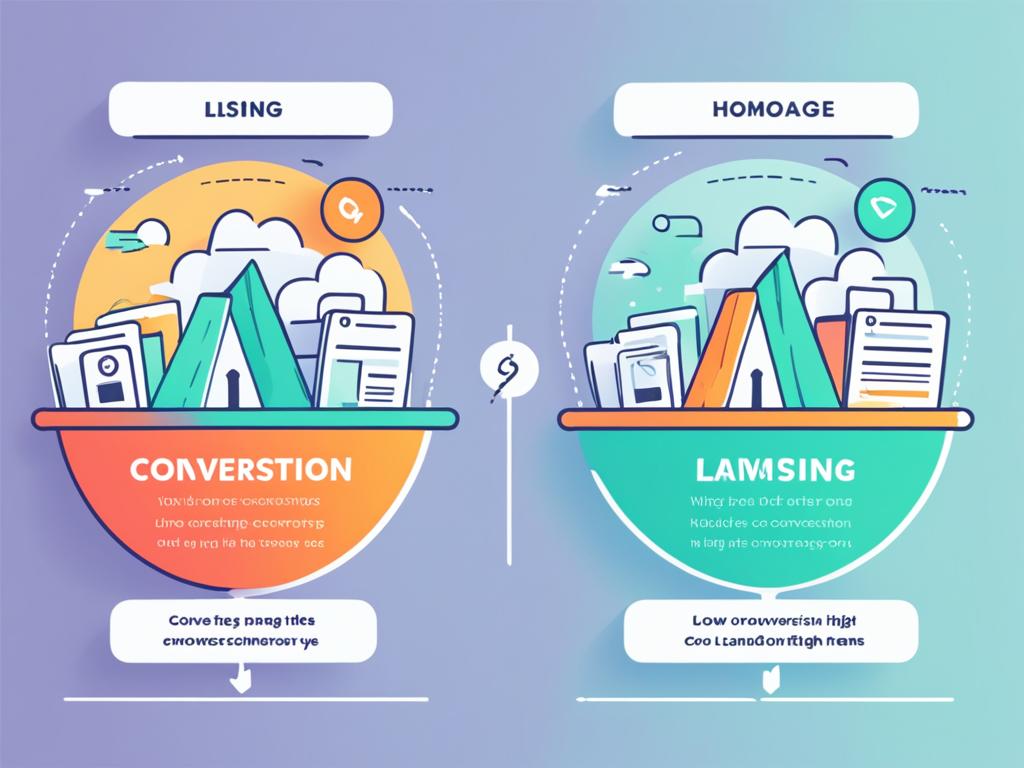
When it comes to your digital marketing strategy, understanding the key differences between a homepage and a landing page is crucial. Both have distinct purposes and play different roles in attracting and converting visitors. Let’s dive deeper into these differences and uncover how they can impact your conversion rates.
Homepage:
Your homepage acts as the virtual front door to your website. It provides a general overview of your company and its offerings. With multiple goals in mind, such as brand awareness, education, and guiding visitors to different sections of your site, a homepage aims to create a lasting impression. It’s like a grand opening where you invite people in, showcase your brand, and encourage exploration.
Landing Page:
On the other hand, a landing page is a dedicated page designed for a specific marketing campaign or promotion. Its sole purpose is to convert visitors into leads or customers. Unlike a homepage, a landing page has a single, focused call to action (CTA) that guides users towards the desired conversion. By eliminating distractions and providing a clear value proposition, landing pages are optimized for higher conversion rates compared to homepages.
Imagine you’re running an online shoe store. Your homepage would showcase your entire shoe collection, highlighting different styles, brands, and promotions. It would encourage visitors to browse and explore. On the other hand, a landing page designed for a specific shoe promotion would present the offer, emphasize its benefits, and feature a prominent CTA, such as “Shop Now” or “Get 20% Off.” The narrow focus and single call to action eliminate distractions and provide a seamless path to conversion.
“While homepages strive to provide a holistic brand experience, landing pages are laser-focused on conversion. They are like landing strips for your marketing efforts. Clear the distractions, and watch your conversion rates take off!”
Homepage vs. Landing Page: A Side-by-Side Comparison
| Homepage | Landing Page |
|---|---|
| General overview of the company | Specific page for a marketing campaign or promotion |
| Multiple goals | Single focused goal: conversion |
| Encourages exploration and browsing | Eliminates distractions for maximum conversions |
| May have various CTAs | Features a single clear and compelling CTA |
As you can see, the differences between a homepage and a landing page are significant. Homepages focus on introducing your brand and encouraging exploration, while landing pages are tailored for driving conversions with laser-like precision.
When it comes to optimizing your digital marketing efforts, incorporating well-designed landing pages into your campaigns can significantly boost your conversion rates. So, keep these distinctions in mind and leverage the power of landing pages to turn your visitors into satisfied customers!
The Different Types of Landing Pages
When it comes to lead generation and driving conversions, there are two main types of landing pages that you should be familiar with: lead generation landing pages and click-through landing pages.
Lead Generation Landing Pages
Lead generation landing pages, also known as lead gen pages or squeeze pages, are specifically designed to collect valuable lead data. These pages offer something of value in exchange for contact information, such as email addresses and names. A common feature of lead generation landing pages is a form that visitors fill out to access the valuable content or resources being offered.
Utilizing a catchy headline and persuasive supporting copy, lead generation landing pages entice visitors to provide their information. The form serves as the primary call to action (CTA), enabling you to capture qualified leads and add them to your marketing funnel for further nurturing and conversion.
Click-Through Landing Pages
Unlike lead generation landing pages, click-through landing pages have a different objective. These pages aim to direct users to take action on another page, usually further along in the conversion process. The purpose of a click-through landing page is to guide visitors to complete a specific action, such as making a purchase, signing up for a free trial, or subscribing to a service.
Click-through landing pages often feature a clear and compelling call to action (CTA) button that encourages visitors to take the next step. The button is strategically placed and designed to stand out, compelling users to click on it and navigate to the desired conversion page.
Click-through landing pages play a crucial role in guiding visitors through the conversion funnel and minimizing friction in the user journey. By streamlining the process and removing distractions, click-through landing pages increase the likelihood of users completing the desired action.
Now that you understand the different types of landing pages, you can leverage their unique benefits to optimize your marketing strategy and drive higher conversions. Whether you need to collect lead data or direct users to a conversion page, landing pages are a powerful tool in your digital marketing arsenal.
How to Drive Traffic to Your Landing Pages
Once you have created impactful landing pages, the next step is to drive traffic to them. Here are four effective strategies to get your landing pages in front of your target audience:
Paid Search Traffic
One way to generate traffic to your landing pages is through paid search advertising. By running ads on popular search engines like Google or Bing, you can target users who are actively searching for keywords related to your offering. Include your landing page as the destination URL in your ad to direct users straight to the conversion point. Remember to optimize your ad copy and keywords to attract relevant clicks.
Paid Social Traffic
Another valuable source of traffic is through paid social advertising. Platforms like Facebook, Instagram, Twitter, and LinkedIn offer highly targeted advertising options, allowing you to reach specific demographics or interests. Create engaging ads that lead directly to your landing pages. By utilizing the power of social media targeting, you can attract users who are more likely to convert.
Email Campaigns
Your existing contact list is a goldmine for driving traffic to your landing pages. Utilize email campaigns to promote your landing pages to your subscribers. Craft compelling email copy, including a strong call to action and a clear value proposition. Whether you’re announcing a new product, offering a limited-time discount, or sharing an informative resource, leverage the power of email marketing to nurture relationships and drive traffic to your landing pages.
Organic Search Traffic
Optimizing your landing pages for organic search visibility is essential to attract traffic from search engine users. Conduct keyword research to identify relevant and high-intent keywords that align with your offering. Incorporate these keywords strategically in your landing page content, meta tags, and headings. By providing valuable information and addressing user intent, you can attract visitors who are actively searching for the solutions you offer.
Combining these strategies will help you maximize the traffic to your landing pages and increase your chances of conversion. Remember to continuously analyze and optimize your campaigns to ensure you’re driving the right traffic and achieving your desired results.
Are There Any Other Channels Where Landing Pages Work?
While landing pages are commonly associated with marketing channels such as paid search, paid social, email campaigns, and organic search, there are several other creative avenues where they can be highly effective. By exploring alternative marketing channels, you can increase your reach and engage with your audience in unique ways.
Native Ads during Podcasts
Podcasts have gained immense popularity in recent years, opening up a new marketing channel for businesses. By incorporating native ads within podcasts, you can seamlessly integrate your message into the content and capture the attention of listeners. Including a landing page link in podcast show notes or during the episode can drive traffic and encourage conversions.
Interactive Quizzes
Interactive quizzes are a fun and engaging way to interact with your audience while also collecting valuable data. By incorporating relevant questions and connecting them to specific landing pages, you can guide users through a personalized experience that ultimately leads to a conversion. Quizzes can be shared on social media, embedded on your website, or promoted through email campaigns.
Print Ads with QR Codes
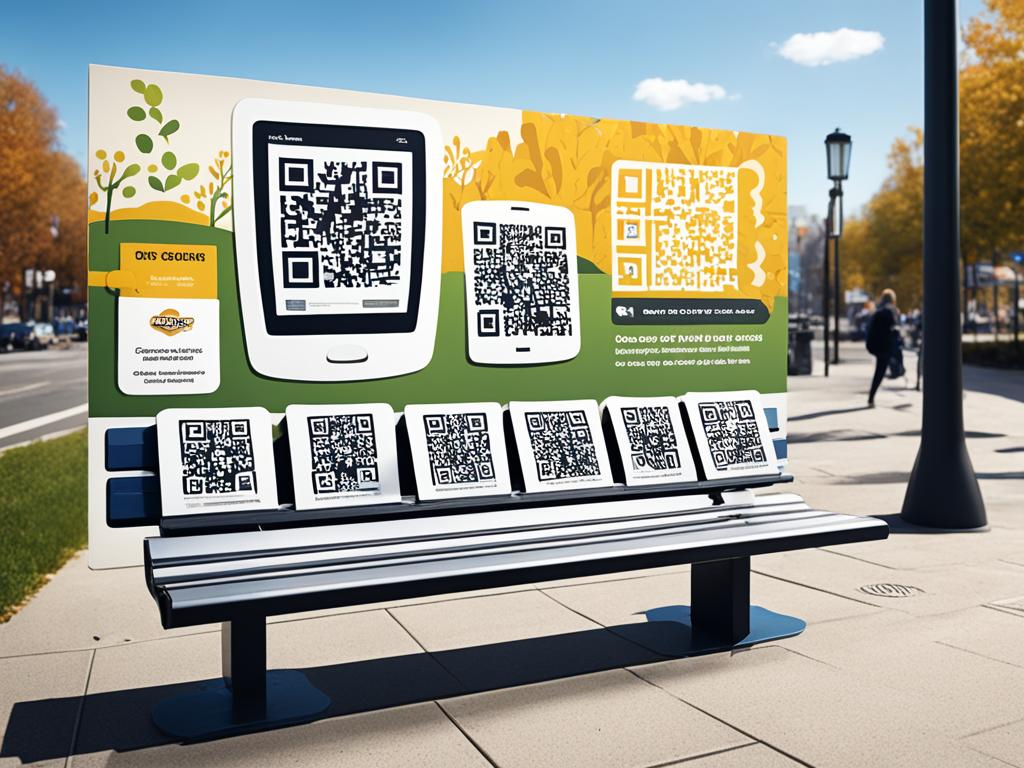
Traditional print advertising can still be a powerful marketing tool when used strategically. By including a QR code in your print ads, you can bridge the gap between offline and online marketing efforts. When users scan the QR code, they can be directed to a landing page tailored to the specific promotion or offer featured in the ad. This allows you to track the effectiveness of your print campaigns and capture leads.
These unconventional marketing channels provide unique opportunities to engage with your audience and drive conversions through landing pages. By thinking outside the box and embracing creativity, you can expand your reach and maximize the potential for conversions.
Why Landing Pages are Important
Landing pages are a vital component of any successful marketing campaign. Unlike regular website pages or homepages, landing pages offer targeted and focused messaging that caters directly to the needs and expectations of your visitors. This tailored approach ensures that your message resonates with your audience, increasing the likelihood of conversions and driving better results.
One of the key benefits of landing pages is their ability to simplify campaign measurement. By utilizing dedicated landing pages for each marketing campaign, you can easily track and analyze the performance of each page, allowing you to make data-driven decisions and optimize your strategies accordingly.
Landing pages also provide ample opportunities for experimentation and optimization. With the ability to test different elements such as headlines, images, CTA buttons, and forms, you can fine-tune your landing pages to maximize conversion rates. This iterative process allows you to continuously improve and refine your marketing efforts, resulting in higher success rates.
From a cost-effectiveness standpoint, landing pages offer significant advantages. By directing traffic from your marketing campaigns to targeted landing pages, you ensure that your visitors are presented with a clear call to action and are guided towards conversion. This streamlined process eliminates distractions and unnecessary steps, reducing the possibility of drop-offs and increasing the overall efficiency of your marketing funnel.
In conclusion, landing pages are a fundamental element of successful marketing campaigns. Their targeted messaging, simplified measurement, optimization potential, and cost-effectiveness make them indispensable tools for driving conversions and ensuring marketing success.
Better Conversion Rates
Landing pages enable you to deliver focused messaging that is specifically tailored to your target audience. By eliminating distractions and presenting a clear call to action, landing pages have been shown to significantly improve conversion rates. According to a study by Marketo, businesses experience an average conversion rate increase of 55% when using landing pages.
Campaign Measurement Made Simple
With dedicated landing pages, you can easily track and analyze the performance of your marketing campaigns. By monitoring metrics such as click-through rates, form submissions, and bounce rates, you can gain valuable insights into the effectiveness of your campaigns and make data-driven decisions to optimize your strategies.
A/B Testing and Optimization
Landing pages provide the perfect playground for A/B testing and experimentation. By testing different elements such as headlines, images, CTA buttons, and form fields, you can identify what resonates best with your audience and optimize your landing pages for maximum conversions. This iterative process allows you to continuously refine and improve your campaigns.
Cost-Effectiveness
When it comes to cost-effectiveness, landing pages are a game-changer. By using targeted landing pages, you can ensure that your marketing campaigns are optimized for conversions. This reduces wasteful spending on irrelevant clicks and increases the overall efficiency of your marketing efforts, ultimately saving you money and improving ROI.
A Visually Engaging Table to Showcase Landing Page Benefits
| Landing Page Benefits | Description |
|---|---|
| Better Conversion Rates | Landing pages significantly improve conversion rates by delivering focused messaging and a clear call to action. |
| Campaign Measurement Made Simple | Landing pages allow for easy tracking and analysis of campaign performance, providing valuable insights for optimization. |
| A/B Testing and Optimization | Landing pages offer opportunities for testing and optimization to identify elements that drive maximum conversions. |
| Cost-Effectiveness | By optimizing campaigns for conversions, landing pages reduce wasteful spending and improve ROI. |

How Landing Pages Work
A landing page is the final step in the user journey before conversion, acting as a powerful tool to guide visitors into taking specific actions. Whether it’s signing up for a newsletter or making a purchase, landing pages are optimized to streamline the user experience and drive conversions.
Users arrive at landing pages through various channels, such as paid search, social media, or email campaigns, where they are enticed by compelling offers or enticing headlines. Once on the landing page, the design and focus are tailored to encourage the intended action, eliminating distractions and simplifying the decision-making process.
Landing pages employ persuasive copywriting, visually appealing graphics, and strategically placed call-to-action buttons to prompt user action. By carefully crafting landing pages, you can effectively convert visitors into leads or customers, achieving your desired conversion goals.
Maximizing Conversion Rates
To maximize conversion rates, landing page developers implement various strategies such as:
- Creating clear and compelling headlines that grab attention and communicate the value proposition.
- Employing persuasive copy that addresses visitor pain points and highlights the benefits of taking action.
- Using captivating visual elements, such as images or videos, to engage and inspire visitors.
- Designing a user-friendly layout that guides visitors towards the call-to-action button or form.
- Optimizing load times to ensure a seamless user experience.
By analyzing user behavior through analytics tools, you can continuously optimize and improve landing page performance to achieve higher conversion rates.
The Psychology of Conversions
“A well-crafted landing page taps into the psychology of conversions, leveraging key principles to influence user decision-making.” – Marketing Expert
Understanding the psychology behind user actions is essential in designing effective landing pages. By incorporating principles such as social proof, scarcity, and authority, you can increase the likelihood of conversions. Social proof involves showcasing testimonials or customer reviews to build trust and credibility. Scarcity techniques, such as limited-time offers or limited availability, create a sense of urgency. Leveraging industry authority through certifications or endorsements can also instill confidence in visitors and prompt them to take action.

Measuring Success and Iterating
Effective landing pages are not static but rather dynamic entities that require constant monitoring and iteration. By tracking key performance indicators (KPIs) such as conversion rates, click-through rates, and bounce rates, you can gauge the success of your landing pages and identify areas for improvement.
Through A/B testing, you can experiment with different headlines, visuals, or layouts to discover which elements drive the highest conversions. Incremental changes based on data-driven insights can lead to significant improvements over time.
The Power of Landing Pages
Landing pages are a vital component of any successful digital marketing campaign. By prioritizing user experience, focusing on clear and compelling messaging, and continuously optimizing based on data and user behavior, landing pages have the power to transform your marketing efforts and drive impressive conversion rates.
How to Create a Landing Page
Creating an effective landing page involves several key elements that work together to capture your audience’s attention and drive conversions. Let’s dive into the essential components of a successful landing page.
Captivating Hero Image
First impressions matter, and a compelling hero image can immediately grab your visitors’ attention. Choose an image that is visually appealing and relevant to your offer. Whether it’s a stunning product photo, a captivating background image, or an eye-catching illustration, make sure it aligns with your brand and messaging. A strong hero image sets the tone for your landing page and entices visitors to explore further.

Catchy Headline
Your headline is the gateway to your offer, so make it count! Craft a catchy, concise, and attention-grabbing headline that immediately communicates the value of your product or service. Use power words, highlight key benefits, and create a sense of urgency or exclusivity. Your headline should spark curiosity and compel visitors to continue reading.
Compelling Supporting Copy
While your headline captures attention, your supporting copy provides additional details and persuades your visitors to take action. Keep your copy concise, easy to read, and focused on the benefits and solutions your offer provides. Highlight key features, address pain points, and use testimonials or social proof to build trust and credibility. Remember, visitors are looking for solutions, so make it clear how your offer can help them.
Effective Form
If your landing page is a lead generation page, including a form is essential. Design a form that is user-friendly, easy to fill out, and asks for the right information. Keep the form fields minimal to reduce friction and only ask for the necessary details. Consider offering an incentive, such as a free guide or exclusive content, to encourage visitors to provide their information in exchange for your offer. Don’t forget to include a strong call to action that clearly states what visitors will receive upon submission.
By implementing these key elements and optimizing each component, you can create landing pages that drive conversions and achieve your desired outcomes. Now that you know the essentials, it’s time to unleash your creativity and start building high-converting landing pages that captivate your audience!
Conclusion
After exploring the world of landing pages, it’s clear that they are an invaluable tool in driving conversions and optimizing marketing campaigns. By providing a focused and targeted experience for visitors, landing pages significantly increase the likelihood of conversions.
Utilizing different types of landing pages, such as lead generation landing pages and click-through landing pages, allows businesses to cater to specific goals and objectives. By driving traffic through various channels, such as paid search, paid social, email campaigns, and organic search, businesses can maximize the impact of their landing pages and attract a wider audience.
Moreover, optimizing landing pages for search engines ensures that they are discovered by potential customers actively searching for relevant keywords. Landing pages effectively turn clicks into customers, whether it’s generating leads, making sales, or any other desired action. They play a pivotal role in boosting overall success and driving results for businesses.
FAQ
What is a landing page?
In the world of digital marketing, a landing page is a standalone web page that is specifically created for marketing or advertising campaigns. It serves as the destination where visitors “land” after clicking on a link from various sources such as emails or online ads.
What is the purpose of landing pages?
The purpose of landing pages is to increase conversion rates and reduce the cost of acquiring leads or sales. They are designed with a single focus and call to action (CTA) to turn visitors into leads or customers.
What is the key difference between a homepage and a landing page?
A homepage provides general information about a company and acts as the gateway to other pages on the website. It has multiple goals and encourages visitors to explore different aspects of the business. On the other hand, a landing page is a standalone page focused on driving conversions. It has a single, clear CTA and is designed to turn visitors into leads or customers.
What are the different types of landing pages?
There are two main types of landing pages: lead generation landing pages and click-through landing pages. Lead generation landing pages collect lead data by offering something of value in exchange for contact information, usually through a form. Click-through landing pages direct users to another page where they can complete a specific action, such as making a purchase or signing up for a free trial.
How can I drive traffic to my landing pages?
There are various ways to drive traffic to your landing pages. Paid search traffic involves running ads on search engines like Google or Bing. Paid social traffic utilizes platforms like Facebook, Instagram, Twitter, or LinkedIn. Email campaigns allow you to promote your landing pages to your existing contacts. Organic search traffic can be achieved by optimizing your landing pages for search engine visibility.
Are there any other channels where landing pages work?
Yes, landing pages can be effective in other channels as well. Native ads during podcasts, interactive quizzes, and traditional print ads with QR codes can all lead users to dedicated landing pages.
Why are landing pages important?
Landing pages play a crucial role in optimizing marketing campaigns and improving conversion rates. They provide focused and targeted messaging, simplify campaign measurement, and provide the opportunity to experiment with different elements for maximum conversions.
How do landing pages work?
Landing pages function as the last step in the user journey before conversion. Users arrive at landing pages through various channels and are encouraged to take a specific action, such as signing up for a newsletter or making a purchase. The design and focus of landing pages are optimized to guide users towards the intended action.
How can I create a landing page?
To create an effective landing page, include a compelling hero image, a catchy headline, supporting copy, and a form for lead generation landing pages. By optimizing each element, you can create landing pages that drive conversions and achieve your desired outcomes.
What is the conclusion about landing pages?
Landing pages are a valuable tool in digital marketing for driving conversions and optimizing marketing campaigns. They provide a focused and targeted experience, increase the likelihood of conversions, and play a crucial role in turning clicks into customers.