
So, you’ve heard the buzz about CRM software, but you might be wondering, “What exactly is CRM software?” Well, buckle up because we’re about to dive into the world of customer relationship management systems!
CRM software, or Customer Relationship Management software, is the smart technology that helps businesses manage their customer relationships and client connections. It’s like having a personal assistant who keeps track of all your interactions with potential and current customers, eliminating the need for manual tracking and the chaos of searching through countless emails and messages.
What makes CRM software so indispensable is its ability to streamline the sales process, boost productivity, and improve the overall customer experience. It serves as a centralized database for storing and organizing customer and business data, giving you easy access to valuable information at your fingertips.
The CRM software market is rapidly growing, and experts predict a staggering increase of nearly 600% by 2025. This indicates the widespread recognition of CRM software’s value and the myriad of benefits it offers to businesses across industries and of all sizes.
So now that we have a basic understanding of what CRM software is, let’s take a closer look at how it specifically benefits industrial companies.
Key Takeaways:
- CRM software is a powerful tool that helps businesses manage customer relationships and client connections.
- It eliminates manual tracking and streamlines the sales process, improving overall efficiency.
- CRM software provides a centralized database for storing customer and business data, fostering better organization.
- The CRM software market is expected to grow by nearly 600% by 2025.
- CRM software benefits industrial companies by enhancing productivity and providing valuable customer insights.
How CRM Software Benefits Industrial Companies
Industrial companies, regardless of their size, can reap significant benefits from CRM software. By having all customer and business data in one centralized location, these companies can improve efficiency, productivity, and collaboration within their teams. With a CRM system, information is easily accessible and shareable, ensuring that everyone is up to date and on the same page.
Furthermore, CRM software includes automation features that streamline the sales process and increase conversion rates. Tasks such as follow-up emails and lead generation can be automated, freeing up valuable time for teams to focus on more strategic activities.
The benefits of CRM software for industrial companies extend beyond the internal operations. By effectively managing customer and business data, these companies can deliver a superior customer experience. They can gain insights into customer preferences, purchase history, and interactions, allowing for personalized and targeted interactions throughout the customer journey.
Implementing CRM software in an industrial company empowers teams to:
- Access and share customer and business data easily and efficiently
- Automate time-consuming tasks, freeing up time for more strategic activities
- Improve collaboration and unity within the company
- Enhance the sales process and increase conversion rates
- Deliver a personalized customer experience based on data-driven insights
By leveraging CRM software, industrial companies can gain a competitive edge in the market, improve customer satisfaction, and drive long-term business growth.
CRM Software Benefits for Industrial Companies
| Benefit | Description |
|---|---|
| Efficiency and Productivity | Centralized customer and business data improves efficiency and productivity |
| Collaboration | Teams can access and share information, fostering unity within the company |
| Automation | Automates tasks like follow-up emails and lead generation for a streamlined sales process |
| Personalized Customer Experience | Data-driven insights enable personalized interactions throughout the customer journey |
| Competitive Advantage | Gains a competitive edge in the market and drives long-term growth |
The ROI of CRM Software
When it comes to investing in technology, companies always want to ensure they’re getting the best return on their investment. And that’s where CRM software comes in. With its undeniable impact on sales conversion rates and long-term success, CRM software is a game-changer that delivers impressive ROI.
On average, companies using CRM software experience an astounding $8.71 return for every dollar spent. That’s right, an ROI that will make your finance department do a happy dance! But what exactly drives this impressive return?
One of the key factors behind this remarkable ROI is the significant improvement in sales conversion rates. With CRM software in place, companies have witnessed conversion rates soaring up to 300%. By streamlining processes, enabling efficient team collaboration, and empowering better customer engagement, CRM software ensures that no opportunity slips through the cracks. Every lead is captured, nurtured, and converted into a happy customer. And we all know that more customers mean more revenue!
But it’s not just about increasing immediate sales. CRM software paves the way for long-term success in sales and customer relationship management. With accurate and centralized data, businesses can build strong relationships with their customers, gaining valuable insights into their preferences, needs, and behaviors. This deep understanding allows for more personalized interactions, creating loyal customers who keep coming back for more.
“CRM software is like having a personal assistant who helps you remember important details about your customers, knows exactly when to follow up, and makes sure nothing falls through the cracks. It’s the secret weapon that fuels sales growth and leaves your competition in the dust.”
So, if you’re looking to boost your company’s success and maximize your technology investment, CRM software is your go-to solution. With its impressive ROI, it’s a no-brainer for businesses of all sizes. Don’t miss out on the opportunity to streamline processes, improve productivity, and skyrocket your sales conversion rates. Seize the power of CRM software and pave the way for a prosperous future!

The CRM Process: Personalizing Customer Interactions
When it comes to building strong customer relationships, personalization is key. In fact, studies have shown that 80% of customers are more likely to make a purchase when brands offer personalized experiences. That’s where the CRM process comes in. By implementing a customer relationship management (CRM) system, businesses can effectively personalize their customer interactions throughout the entire customer lifecycle.
The CRM process consists of five main steps:
- Reaching potential customers
- Customer acquisition
- Conversion
- Customer retention
- Customer loyalty
Each step plays a crucial role in enhancing the overall customer experience and maximizing customer lifetime value. Let’s take a closer look at each step:
1. Reaching potential customers
Before you can acquire customers, you need to reach them. This step involves creating brand awareness and attracting potential customers through various marketing channels, such as social media, email marketing, and content marketing. By leveraging the power of CRM tools, you can gain valuable insights into your target audience and create targeted marketing campaigns that resonate with their needs and preferences.
2. Customer acquisition
Once you’ve attracted potential customers, it’s time to convert them into actual leads. CRM systems can help streamline lead acquisition by capturing and organizing lead information, allowing your sales team to easily manage and track leads throughout the sales pipeline. By leveraging CRM technology, such as lead enrichment and lead scoring, you can prioritize leads and focus your efforts on those with the highest potential for conversion.
3. Conversion
Converting leads into customers requires personalized and tailored approaches. A CRM platform enables you to nurture leads by providing them with relevant information, timely follow-ups, and personalized recommendations. By leveraging customer data stored in your CRM system, you can create targeted marketing campaigns that speak directly to the individual needs and pain points of your leads, increasing the likelihood of conversion.
4. Customer retention
Once you’ve successfully converted leads into customers, it’s crucial to focus on customer retention. This step involves building strong relationships with your customers and providing outstanding customer service. CRM tools offer features that allow you to store and analyze customer information, enabling you to personalize interactions and anticipate customer needs. By delivering exceptional customer experiences and addressing any concerns or issues promptly, you can foster long-term customer loyalty.
5. Customer loyalty
Customer loyalty is the ultimate goal of the CRM process. Loyal customers not only continue to purchase your products or services but also become brand advocates, recommending your business to others. To drive customer loyalty, it’s important to stay engaged with your customers, offer personalized rewards and incentives, and continuously provide value. By leveraging CRM systems, you can track customer preferences, purchase history, and engagement levels, enabling you to deliver targeted loyalty programs that resonate with individual customers.
By following the CRM process and utilizing the power of CRM tools, businesses can create personalized customer experiences that differentiate them from their competitors. Understanding and meeting customer needs throughout the customer lifecycle is essential for building lasting relationships and driving long-term success.

The Five Steps of the CRM Process
When it comes to effective customer relationship management, the CRM process plays a vital role. This collaborative process consists of five essential steps that work together to drive business success. From generating brand awareness to driving upsells, each step is crucial for building strong customer relationships and achieving long-term growth.
- Generate Brand Awareness: Before you can acquire leads and convert them into customers, you need to create brand awareness. By utilizing CRM tools, you can gather valuable customer data, such as demographics and purchase history, to create targeted marketing campaigns that resonate with your target audience. Harness the power of personalized marketing to make a lasting impression and generate interest in your products or services.
- Acquire Leads: The next step in the CRM process is acquiring leads. This involves reaching out to potential customers and capturing their interest. With the help of CRM technology, you can track and manage leads effectively, ensuring no opportunity slips through the cracks. Utilize lead enrichment tools and lead scoring techniques to gain valuable insights and identify the most promising leads.
- Convert Leads into Customers: Converting leads into customers requires a strategic approach. With a CRM system in place, you can nurture leads and build trust through personalized interactions. Set reminders, follow up at the right time, and provide valuable resources to guide your leads through the buying process. Maximize conversions by leveraging customer data and tailoring your approach to each individual’s needs and preferences.
- Provide Superior Customer Service: Exceptional customer service is a cornerstone of successful CRM. With CRM tools, you can deliver superior customer support by having access to relevant customer information and historical data. Streamline support ticket management and offer omnichannel support for a seamless customer experience. Resolving issues promptly and personalizing interactions will leave a lasting positive impression on your customers.
- Drive Upsells: The final step of the CRM process revolves around driving upsells. By leveraging customer data and utilizing a CRM system, you can identify upsell opportunities and create targeted marketing campaigns. Segment your customers based on their purchase history and preferences, then deliver personalized recommendations and promotional offers to encourage additional purchases. Proactive communication and regular check-ins can also uncover potential upsell opportunities.
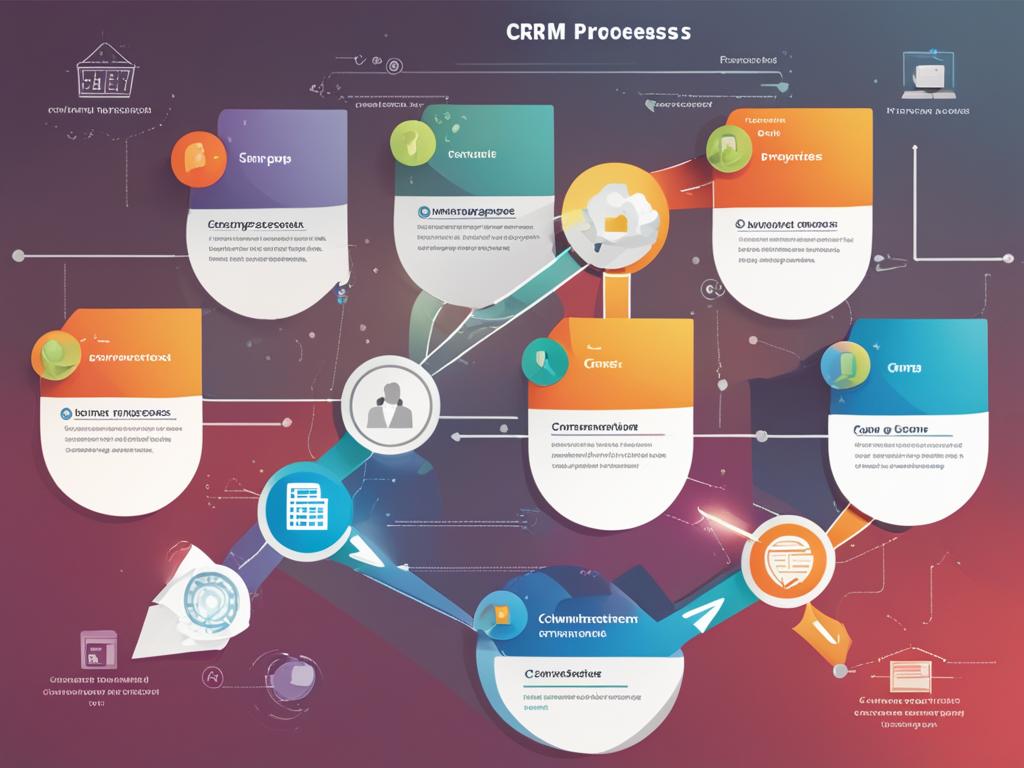
By implementing the CRM process and effectively utilizing CRM tools, you can streamline your operations, enhance customer interactions, and drive business growth. Stay one step ahead of your competition by generating brand awareness, acquiring and converting leads, providing superior customer service, and driving upsells. Remember, the success of CRM relies on collaborative efforts across marketing, sales, and support teams, all working together towards the common goal of delivering exceptional customer experiences.
Generating Brand Awareness with CRM Tools
In the world of marketing, generating brand awareness is the first step towards building a successful customer base. With the right tools and strategies, you can effectively reach your target audience and make a lasting impression. And that’s where CRM platforms come into play.
A CRM platform is a powerful tool that provides valuable customer data, allowing marketers to gain a deep understanding of their target audience. By analyzing past leads and customers, you can identify patterns and preferences that resulted in conversions. Armed with this information, you can create highly targeted marketing campaigns that resonate with your audience and generate brand awareness.
Imagine having access to a centralized database of customer data, including demographics, purchase history, and engagement metrics. With a CRM platform, this becomes a reality. Armed with this wealth of information, you can tailor your marketing efforts to reach the right people at the right time.
But it doesn’t stop there. A CRM platform also allows you to track the performance of your marketing campaigns, measure their impact, and make data-driven decisions. You can easily monitor key metrics like open rates, click-through rates, and conversion rates, enabling you to optimize your campaigns for maximum effectiveness.
“CRM platforms empower marketers to leverage customer data and create targeted campaigns that drive brand awareness and customer engagement.” – Marketing Guru
By utilizing a CRM platform, you can take your marketing efforts to the next level. Whether it’s through email marketing, social media advertising, or content creation, a CRM platform provides the tools you need to effectively reach your target audience and generate brand awareness.
So, don’t just rely on guesswork or generic marketing strategies. Harness the power of CRM tools to create personalized and impactful campaigns that resonate with your audience and elevate your brand. With a CRM platform, you can turn brand awareness into brand loyalty and fuel the growth of your business.
Key Benefits of Generating Brand Awareness with CRM Tools:
- Access to valuable customer data for a deep understanding of your target audience
- Ability to create highly targeted marketing campaigns that resonate with your audience
- Centralized database of customer data for personalized outreach
- Tracking and measurement of campaign performance for data-driven decision-making
Acquiring and Converting Leads with CRM Systems
In the CRM process, acquiring and converting leads plays a pivotal role in driving sales growth and expanding your customer base. With the help of CRM technology, such as lead enrichment tools and lead scoring, you can streamline the lead acquisition process and identify the most promising opportunities for conversion.
Let’s take a closer look at how CRM systems empower you to optimize lead acquisition and conversion:
-
Lead Enrichment Tools
CRM platforms offer lead enrichment tools that provide detailed information about potential leads. These tools leverage various data sources to enrich your leads’ profiles, offering insights such as demographics, online behavior, and social media activity. By understanding your leads better, you can tailor your marketing and sales strategies to resonate with their specific needs and preferences.
-
Lead Scoring
Lead scoring is a feature provided by CRM systems that helps you prioritize and focus on leads with the highest potential for conversion. By assigning scores based on predefined criteria such as engagement level, demographics, and firmographics, you can identify leads that are most likely to convert into customers. This allows your sales team to allocate their time and effort effectively, maximizing their impact on the leads that matter most.

Once you have acquired leads, the next step is to convert them into customers. This requires nurturing and building trust through personalized interactions and timely follow-ups. A CRM platform provides you with the necessary tools to manage this process efficiently:
-
Set Reminders: With a CRM platform, you can set reminders for follow-up tasks and important milestones in the customer journey. This ensures that no lead falls through the cracks and allows you to maintain consistent communication, increasing the likelihood of conversion.
-
Follow Up: CRM systems enable you to automate follow-up processes, such as sending personalized emails or making phone calls. By automating these tasks, you can save time and ensure that leads are nurtured in a timely manner, enhancing your chances of conversion.
-
Provide Resources: A CRM platform also allows you to easily provide leads with relevant resources, such as product brochures, case studies, or demo videos. By offering valuable information and content tailored to their needs, you can build credibility and guide them towards a purchasing decision.
Remember, effective lead acquisition and conversion are crucial for driving business growth. By leveraging CRM technology, you can optimize your processes, seize opportunities, and build lasting relationships with your customers.
Providing Superior Customer Service with CRM Tools
Delivering top-notch customer service is crucial for retaining loyal customers and fostering long-term relationships. Fortunately, CRM tools offer a range of features that enable support teams to excel in their responsibilities and provide exceptional service. With access to comprehensive customer information and historical data, support agents can swiftly resolve support tickets and offer personalized assistance that meets individual customer needs.
But that’s not all—CRM systems also provide the advantage of omnichannel support, allowing customers to reach out through various communication channels, such as email, live chat, and social media, among others. This omnichannel support ensures that all customer inquiries and issues are efficiently managed from a single view, streamlining the support process and enhancing the overall customer experience.
When armed with the right CRM tools, support agents can effortlessly navigate customer support interactions, providing a stress-free and efficient support experience that leaves customers satisfied and impressed.

CRM Tools – Empowering Support Teams
CRM tools are designed to enhance the customer service journey, equipping support teams with the necessary resources to deliver outstanding service. Let’s take a closer look at some of the key CRM features that empower support teams:
| CRM Features | Benefits |
|---|---|
| Centralized Customer Information | Access to a comprehensive database of customer information enables support agents to have a holistic view of each customer, making it easier to deliver personalized assistance and resolve issues efficiently. |
| Historical Data | Access to past interactions and purchase history allows support agents to provide contextually relevant support and address customer concerns effectively. |
| Omnichannel Support | Customers can reach out through their preferred communication channel, streamlining their support experience and ensuring consistent and seamless interactions. |
| Automated Ticket Management | CRM tools automate the ticketing process, ensuring support tickets are managed efficiently, assigned to the appropriate agents, and resolved promptly. |
| Knowledge Base Integration | Integration with a knowledge base allows support agents to access relevant articles, FAQs, and troubleshooting guides, enabling them to provide quick and accurate solutions to customer queries. |
With these powerful CRM features at their disposal, support teams can streamline their workflows, improve response times, and ultimately deliver outstanding customer service that exceeds expectations.
Driving Upsells with Personalized Recommendations
Now that you have reached the final step of the CRM process, it’s time to drive upsells and boost your sales with personalized recommendations. Harness the power of your CRM system and leverage customer data to identify prime upsell opportunities and create targeted marketing campaigns that truly resonate with your customers.
One of the key features of a CRM system is its ability to segment customers based on their purchase history and behavior. By grouping customers with similar profiles, preferences, and past purchases, you can create highly targeted and personalized marketing campaigns that grab their attention and push them towards making additional purchases.
Let’s take it a step further. With customized email templates available in your CRM system, you can deliver timely and relevant product releases, promotional offers, and personalized recommendations directly to your customers’ inboxes. By tailoring your communication and highlighting products or services that align with their interests and previous purchases, you can significantly increase the chances of driving upsells.
But that’s not all. Regular check-in calls and proactive communication play a vital role in identifying upsell opportunities. By staying connected with your existing customers and having meaningful conversations, you can gain valuable insights, understand their evolving needs, and recommend additional products or services that truly enhance their experience.
So, whether it’s through targeted email campaigns or personalized conversations, your CRM system provides the tools you need to drive upsells and boost your sales. By making the most of the valuable customer data at your fingertips, you can exceed your customers’ expectations and achieve long-term success.
Upselling Success Stories
“Our company saw a 30% increase in upsells within just three months after implementing a CRM system. By utilizing personalized recommendations based on customer data, we transformed our marketing efforts and saw a significant boost in revenue. The results speak for themselves!”
Maximizing Upsell Opportunities with CRM Tools
A powerful CRM system offers a wide range of features that will help you uncover and maximize upsell opportunities:
- Customer segmentation: Group customers based on purchase history, interests, and preferences.
- Email automation: Utilize customized email templates to deliver personalized recommendations and product offers.
- Communication tracking: Stay connected with customers and track interactions to identify upsell opportunities.
- Analytics and reporting: Monitor the effectiveness of upsell campaigns and make data-driven decisions.
With these tools at your disposal, you’ll be able to create targeted marketing campaigns, deliver personalized recommendations, and ultimately drive upsells.
| Upsell Results | Companies |
|---|---|
| Increased Revenue | 80% |
| Customer Retention | 90% |
| Upsell Conversion Rate | 25% |
| Customer Satisfaction | 95% |
Conclusion
CRM software is the secret ingredient to unlocking the full potential of your business. By harnessing the power of CRM, you can revolutionize your customer relationships, streamline your sales process, and create unforgettable customer experiences. The benefits of CRM software are undeniable, with businesses of all sizes reaping the rewards of increased productivity, improved efficiency, and long term success.
By implementing the CRM process and utilizing CRM tools, you can supercharge your business. You’ll maximize your reach, acquire and convert leads with ease, provide unparalleled customer service, and drive upsells like never before. Imagine having all your customer data in one place, accessible at any time, allowing you to personalize interactions and create targeted marketing campaigns that truly resonate.
CRM software centralizes your customer data and automates tedious tasks, freeing up time for you and your team to focus on what truly matters – growing your business. With CRM, you’ll streamline your processes, boost productivity, and watch your sales conversion rates skyrocket. It’s the secret weapon that sets you apart from the competition and propels you towards long term success.
So, don’t wait any longer. Embrace the power of CRM software and unlock a world of possibilities. Take control of your customer relationships, elevate your sales process, and deliver unforgettable experiences. With CRM by your side, the sky’s the limit for your business.
FAQ
What is CRM software?
CRM software, or Customer Relationship Management software, is smart software that tracks interactions with potential and current customers. It eliminates the need for manual tracking and scrambling through inboxes, making the sales process easier and improving the overall customer experience.
How does CRM software benefit industrial companies?
CRM software can be beneficial for industrial companies as it provides a centralized database for customer and business data. Regardless of the company size, having all customer and business data in one place improves efficiency and productivity. CRM software also includes automation features that free up time for teams by taking care of certain tasks, such as follow-up emails and lead generation, improving the sales process and increasing conversion rates.
What is the ROI of CRM software?
Companies that invest in CRM software see a significant return on their technology investment. On average, companies using CRM software have an ROI of .71 for every dollar spent. This is due to the improvements in sales conversion rates, which can increase by up to 300% with the use of CRM software.
What is the CRM process?
The CRM process is a strategy that focuses on personalizing and meaningful customer interactions. It consists of reaching potential customers, customer acquisition, conversion, customer retention, and customer loyalty. By implementing a CRM system, businesses can effectively execute this process and turn leads into loyal customers.
What are the steps of the CRM process?
The CRM process comprises five collaborative steps: generating brand awareness, acquiring leads, converting leads into customers, providing superior customer service, and driving upsells. Marketing, sales, and support departments work together to execute each step. Effective use of a CRM system can streamline and enhance these steps.
How do CRM tools help in generating brand awareness?
CRM tools help in generating brand awareness by providing valuable customer data that helps marketers understand their target audience and create effective campaigns. By analyzing past leads and customers, marketers can identify patterns and preferences that resulted in conversions, allowing for more personalized and effective outreach.
How do CRM systems aid in acquiring and converting leads?
CRM systems aid in acquiring and converting leads by providing detailed information about leads through lead enrichment tools and lead scoring. This simplifies the process and helps identify opportunities for sales. Conversion of leads into customers requires effective nurturing and building trust, which can be aided by using a CRM platform to set reminders, follow up, and provide resources to leads.
How do CRM tools enable superior customer service?
CRM tools offer features that enable support teams to deliver excellent service. Access to customer information and historical data allows support agents to quickly resolve tickets and provide personalized assistance. CRM systems also provide omnichannel support, ensuring inquiries and issues are efficiently managed in a single view.
How can CRM systems drive upsells with personalized recommendations?
By utilizing customer data and a CRM system, businesses can identify upsell opportunities and create targeted marketing campaigns. CRM tools allow for effective segmentation, grouping customers with similar purchase histories. Custom email templates can then be used to send relevant product releases and promotional offers to customers who are more likely to make additional purchases.
What are the benefits of CRM software?
CRM software plays a crucial role in managing customer relationships, improving the sales process, and providing a personalized customer experience. It offers numerous benefits to businesses of all sizes and can significantly impact long term success. By implementing the CRM process and utilizing CRM tools, businesses can maximize reach, acquire and convert leads, provide superior customer service, and drive upsells.