

Welcome to the world of search engine optimisation (SEO) basics! In this guide, we will dive into the fundamental principles of SEO that can help you boost your website’s rank and dominate the search engine results pages (SERPs). So, whether you’re a business owner, a web agency professional, or an aspiring SEO specialist, get ready to unlock the secrets of SEO and take your online presence to new heights!
Search engine optimisation, or SEO, is the art of optimizing your website to make it more appealing to search engines and improve its visibility in organic search results. By making strategic changes to your website’s structure, content, and performance, you can increase your chances of being discovered by your target audience and drive valuable organic traffic to your site.
SEO is not about gaming the system or using shady tactics to trick search engines. It’s about creating a website that is valuable to both users and search engines. By understanding how search engines work and aligning your website with their requirements, you can improve your chances of ranking higher in search results and reaching more potential customers.
Key Takeaways:
- SEO is the process of optimizing your website to improve its visibility in search engine results pages.
- SEO helps drive targeted traffic to your website, increase brand awareness, and gain a competitive advantage.
- SEO involves making small modifications to various parts of your website to improve its user experience and performance.
- Optimizing your website for SEO requires understanding search intent, conducting keyword research, and creating high-quality, informative content.
- By following SEO best practices, you can boost your website’s rank and attract a targeted audience.
Who is this guide for?
This guide is your ultimate resource for mastering the art of search engine optimization (SEO). Designed for a diverse audience, it provides valuable insights and practical tips tailored to different roles and goals. Whether you’re a growing business owner, a multitasking web agency professional, or a DIY SEO specialist, this guide covers the essential knowledge and best practices you need to achieve success in Google Search.
Here’s a breakdown of who can benefit from this comprehensive SEO guide:
- Growing Business Owners: If you’re the proud owner of a budding business and want to boost your online presence, this guide will equip you with the necessary tools to navigate the ever-changing world of SEO and attract valuable organic traffic to your website.
- Web Agency Professionals: Working in a web agency requires knowledge of cutting-edge SEO techniques. This guide will help you stay on top of your game and provide excellent services to your clients, elevating their websites to new heights in Google Search.
- DIY SEO Specialists: Are you passionate about the intricacies of search engine optimization and prefer to handle it yourself? This guide will sharpen your SEO skills and empower you to take full control of your website’s performance in Google Search, making you a true SEO specialist.
This SEO guide is your map to success in the vast digital landscape. With its comprehensive approach and actionable advice, you’ll be well-equipped to tackle the challenges of SEO and drive your website to new heights of visibility and profitability.
The Basics of SEO
When it comes to search engine optimization (SEO), it’s all about optimizing your website to improve its user experience and performance in organic search results. While the changes you make may seem small, they can have a significant impact when combined with other optimization techniques. The goal of SEO is to make your website valuable to both users and search engines, ensuring that search engines understand and present your content effectively while providing a better experience for users.
Website optimization is an essential part of SEO. It involves making various modifications to different parts of your website to enhance its overall performance. By improving the user experience, you can attract and retain more visitors, leading to increased engagement and conversions.
“SEO is like a well-dressed website. It knows how to impress search engines and delight users at the same time.”
A well-optimized website is easy for search engines to navigate and understand. It follows best practices and provides valuable content to users, increasing the chances of ranking higher in search results. In turn, this can drive more organic traffic to your website and improve your online visibility.
Improving user experience goes hand in hand with website optimization. When users visit your site, they should find it easy to navigate, access relevant information, and have an enjoyable overall experience. A positive user experience keeps visitors engaged and encourages them to explore more of your content.
Search engine understanding is another crucial aspect of SEO. By optimizing your site according to search engine guidelines, you increase the likelihood of search engines properly understanding your content. This improves your chances of ranking for relevant keywords and appearing in search results that match user queries.
To summarize, SEO involves optimizing your website for both search engines and users. By making small but impactful modifications, you can enhance the user experience, improve search engine understanding, and boost your website’s overall performance. With SEO as the backbone, your website can gain the visibility it deserves and attract a targeted audience.

Getting Started
To embark on your SEO journey, it’s crucial to build a website that not only benefits users but also optimizes its content to enhance the overall user experience. While we can’t guarantee you automatic first-page rankings on Google, following the best SEO practices will undoubtedly make it easier for search engines to crawl, index, and understand your content. In this guide, we’ll provide you with fresh ideas on website improvement and optimization, helping you skyrocket your online presence and attract the right audience.
But hey, that’s not all! We also want to hear from you. Have burning SEO questions? Need some feedback on your website improvement efforts? Or maybe you want to share your SEO success stories? Head on over to the Google Search Central Help Community, a buzzing hub of like-minded individuals and industry experts ready to assist you on your SEO journey. Don’t be shy, join the conversation and let’s grow together!

Now, let’s dive into the wonderful world of SEO and unlock the untapped potential of your website!
Determine Whether Your Site is in Google’s Index
Curious to know if your website is indexed by Google? You can easily find out by performing a site search. Simply enter site:yourwebsitename.com in the Google search bar, and it will display all the pages indexed for your site. Check it out and see if your website is hitting the mark on Google’s radar!
What if you can’t find your site in the search results? Don’t worry, there could be several reasons for this:
- Poor Connectivity: If your site has connectivity issues or is frequently offline, it may not be properly indexed by Google.
- Recent Launch: If your website is new, it might take some time for Google to discover and index it. Patience is key!
- Crawlability Issues: Ensure that your website’s navigation and links are easily accessible to search engine crawlers. Improperly structured websites may hinder proper indexing.
- Errors: Check for any errors on your website, including broken links or server issues, that might affect the crawling and indexing process.
- Blocked Access: If you have unintentionally blocked search engine access to your site through your website’s robots.txt file, it could prevent Google from indexing your pages.
Remember, Google is constantly crawling the web, discovering and indexing new pages. So, if your site is not indexed yet, keep optimizing and improving it to boost its visibility and crawlability. Don’t lose faith yet!
Aspiring webmasters can utilize Google Search Console for submitting their website’s content directly to Google and monitoring their site’s performance in Google search. This tool provides valuable insights into indexing, search queries, and crawl statistics, enabling webmasters to stay on top of their SEO game with ease.

| Pros | Cons |
|---|---|
| Increased visibility and organic traffic | Potential privacy concerns |
| Improved website authority and credibility | Possibility of exposing sensitive information |
| Effective content discovery and indexation | Potential risk of content duplication |
Do You Need an SEO Expert?
So, you’ve learned the basics of search engine optimization (SEO) from this guide and you’re ready to boost your website visibility on search engines. But here’s the question: do you need an SEO expert to take your SEO game to the next level?
Well, the choice is yours, SEO mastermind.
An SEO expert is someone who is trained in the art of website optimization and can help you navigate the competitive realm of search engine optimization. While this guide is packed with enough information to optimize your site, an SEO professional can provide valuable insights and implement advanced strategies to give your website an edge.
But what exactly can an SEO expert bring to the table? Here are some of the SEO services they offer:
- Reviewing site content: An SEO expert can analyze your website’s content and provide valuable advice on how to improve it for better search engine visibility. They can identify areas for optimization, suggest relevant keywords, and help you create compelling content that attracts both search engines and users.
- Offering technical advice: Technical SEO can sometimes be a maze of complex algorithms and coding. An SEO professional can provide technical advice to ensure your website is optimized for search engine crawlers, mobile-friendly, and has the necessary tags and metadata.
- Developing content: If you’re struggling with content creation, an SEO expert can help. They can assist you in creating high-quality, optimized content that aligns with your target keywords and satisfies user search intent.
- Managing online campaigns: SEO isn’t just about optimizing your website; it also involves managing online campaigns such as paid advertising, social media marketing, and link building. An SEO expert can create and manage these campaigns to increase your website’s visibility and drive targeted traffic.
- Conducting keyword research: Keyword research is a crucial element of SEO. SEO experts have the skills to perform in-depth keyword research, identify relevant keywords for your industry and target audience, and optimize your content accordingly.
- Providing SEO training: If you’re interested in becoming an SEO pro yourself, you can take advantage of an SEO expert’s training services. They can teach you the ins and outs of SEO, equip you with the necessary tools and knowledge, and empower you to take charge of your website’s optimization.
- Having expertise in specific markets: SEO is not a one-size-fits-all approach. An SEO expert with experience in your specific industry or market can provide customized strategies tailored to your niche. They understand the unique challenges and trends in your market and can help you stay ahead of the competition.
Before you make a decision, it’s crucial to research and understand the advantages and potential risks of hiring an SEO professional. Take the time to find someone who aligns with your goals, has a proven track record, and can provide references or case studies of their past successes.
Remember, while this guide has equipped you with the knowledge to optimize your site, an SEO expert can elevate your SEO game and help you achieve even greater results. So, choose wisely, SEO maven, and take your website visibility to new heights!

Here’s what some SEO experts have to say:
“Investing in an SEO expert is like having a secret weapon in the digital marketing world. They have the knowledge, skills, and experience to unravel the complexities of SEO and give your website the visibility it deserves.”
– Amanda Davis, SEO Specialist
“An SEO expert can not only improve your website’s search engine rankings but also save you time and effort. They are familiar with the latest SEO trends and can implement strategies that stand the test of time.”
– Sarah Johnson, SEO Consultant
Help Google Find Your Content
Getting your website on Google is crucial for increasing its visibility and attracting more visitors. To ensure Google can discover and index your site effectively, there are a few key steps you can take.
Submit a Sitemap
A sitemap is a file that outlines the structure of your website and provides information about new or updated pages. By submitting a sitemap to Google, you help search engines understand the layout of your site and easily crawl and index your pages.
Here’s an example of what a sitemap can look like:
| Page URL | Last Modified |
|---|---|
| https://www.example.com/home | 2022-01-01 |
| https://www.example.com/about | 2022-01-02 |
| https://www.example.com/products | 2022-01-03 |
Remember to update your sitemap whenever you add or modify pages on your site.
Promote Your Site
In addition to submitting a sitemap, it’s important to actively promote your site to increase its visibility. One effective way to do this is by obtaining backlinks from other reputable websites. When other websites link to yours, it signals to Google that your content is valuable and trustworthy.
“The more quality backlinks you have, the more likely Google is to discover and index your site, ultimately improving your website visibility in search results.” – SEO Specialist
You can also promote your site through social media platforms, online directories, and collaborations with influencers or industry leaders. The more exposure your site receives, the higher the chances of attracting organic traffic from Google search.
Use Robots.txt
Robots.txt is a file that instructs search engine crawlers which pages or directories they should not crawl or index. It’s essential to use Robots.txt to indicate any pages you don’t want search engines to discover. This can include sensitive or confidential information, duplicate pages, or pages undergoing maintenance.
Here’s an example of how you can use Robots.txt:
User-agent: *
Disallow: /private/
Disallow: /temp/
Disallow: /admin/
By utilizing Robots.txt effectively, you can control what search engines access on your site and ensure that only relevant and valuable content appears in search results.
By following these recommendations, you can help Google find and index your content easily, improving your website’s visibility in Google search results.

Avoid Blocking Sensitive Content
When it comes to protecting sensitive or confidential content on your website, relying solely on the robots.txt file is not enough. While this file can instruct well-behaved crawlers not to crawl certain pages, it doesn’t prevent the server from delivering the content if directly requested. So, what can you do to ensure that sensitive information doesn’t appear in search results?
One effective method is to use the noindex tag. By adding this tag to the HTML code of your sensitive pages, you can explicitly instruct search engines not to index them. This ensures that the content remains hidden from public view and search engine results.
For added security, consider implementing proper authorization methods such as user passwords. This way, even if someone tries to access the sensitive content directly, they will be prompted to enter credentials, protecting the information from unauthorized access.
If you want to go a step further, you can remove the sensitive pages entirely from your website. By deleting them, you eliminate the risk of accidental exposure and ensure that the content is completely inaccessible to both search engines and users.
If you have valuable but sensitive content to protect, relying solely on robots.txt is like putting a “Keep Out” sign on your front door and hoping no one opens it. Use the noindex tag or implement proper authorization to lock the door securely and keep your sensitive information hidden.
Pros and Cons of Blocking Sensitive Content
| Pros | Cons |
|---|---|
| Offers some level of guidance for well-behaved crawlers | Does not prevent direct access to sensitive content |
| Can be a quick and easy solution for certain scenarios | Does not ensure complete protection from unauthorized access |
| Allows search engines to focus on non-sensitive content | May inadvertently expose content if not properly configured |

Remember, when it comes to sensitive content, it’s important to implement comprehensive measures to protect it. Simply blocking crawlers with robots.txt is not enough, and you need to take additional steps to ensure the confidentiality and security of your information.
Helping Google and Users Understand Your Content
When it comes to ranking on search engines, understanding search intent is key. It’s important to dig deep and comprehensively understand the underlying reason why a person searches for a particular keyword. By doing so, you can create content that not only captures their attention but also satisfies their intent. Google has gotten smarter over the years and can now determine if a page genuinely satisfies search intent. If your content hits the mark, Google may reward you with higher rankings.
User experience (UX) is another crucial factor in optimizing content. The way users engage with your site and their overall experience can greatly impact your rankings. If users find your site engaging, accessible, and valuable, they are more likely to spend time exploring it, thus sending positive signals to search engines. To optimize user experience, pay attention to the above-the-fold section of your website. This is the first glimpse visitors get, so make it compelling, impactful, and easy to navigate.
One way to enhance user experience is by using enticing calls-to-action (CTAs). Guide your users towards taking desired actions such as signing up for newsletters, making purchases, or subscribing to your content. This not only helps users navigate your site effectively but can also increase conversions and drive business growth.
“Optimizing the above-the-fold section, improving UX, using enticing calls-to-action (CTAs), and avoiding text walls are essential for optimizing content for search engines and users.”
Avoid overwhelming users with extensive blocks of text. Instead, break up content with meaningful, visually appealing elements such as images, infographics, or videos. This not only adds variety but also makes your content more engaging and easier to digest. Remember, content optimization is about providing value to users while also making it easier for search engines to understand and present your content effectively.
Create an Engaging Above-the-Fold Section
When optimizing the above-the-fold section, focus on capturing your visitors’ attention and conveying the value your content provides. Design a visually appealing layout that highlights the most important information through compelling headlines, relevant images, and clear CTAs. Ensure that your website’s navigation is intuitive and easily accessible, allowing users to seamlessly explore your site and find what they’re looking for.
The Power of User Experience (UX)
User experience is not only crucial for search engine optimization but also for retaining and converting visitors into loyal customers. A seamless, user-friendly interface, fast loading times, and easy navigation are key factors that contribute to a positive user experience. Prioritize mobile responsiveness, as an increasing number of users access websites through their smartphones or tablets.
Enticing Calls-to-Action (CTAs)
Compelling CTAs guide users towards taking specific actions, such as making a purchase, downloading a resource, or signing up for a newsletter. These actions not only enhance user engagement but also help in building a loyal and active user base. Make your CTAs visually appealing, clearly communicate the benefit users will gain, and place them strategically throughout your content.
Avoiding Text Walls
Long paragraphs and extensive text blocks can be overwhelming for users and deter them from engaging with your content. Break up your content into smaller, bite-sized paragraphs and use subheadings to structure it. This provides users with a visually appealing reading experience and makes it easier for them to skim through your content. Additionally, utilize bullet points and numbered lists to present information in a concise and digestible format.
By optimizing your content with search intent and user experience in mind, you can create a valuable resource that ranks higher on search engine results pages and provides a seamless, enjoyable experience for your users.

Create an Optimal, SEO-Friendly Hierarchical Structure
Crafting an effective hierarchical structure for your website is crucial for optimizing its performance in search engine rankings. By implementing an SEO-friendly structure, you can enhance the user experience, facilitate navigation, and ensure search engines understand the main topics and subtopics of your page.
Here are some key strategies to create an optimal hierarchical structure:
- Organize Content: Arrange your content in a logical flow that makes it easy for visitors to navigate your site. Group related topics together and create a clear hierarchy, ensuring each page is categorized appropriately.
- Use Appropriate Headings: Incorporate headings and subheadings using HTML tags (H1, H2, H3) to structure your content. This helps search engines understand the importance and relevance of each section.
- Optimize for On-Page SEO: Ensure that each page has a unique and descriptive title tag that accurately reflects the content. Utilize meta descriptions to provide a concise summary of what users can expect when visiting the page. Additionally, optimize your URLs to be descriptive and include relevant keywords.
An optimal hierarchical structure not only improves search engine visibility but also enhances the user experience, which can lead to increased engagement and conversions.
Remember, a well-structured website hierarchy helps search engines index your content effectively and provides users with a seamless browsing experience.
| Benefits of an SEO-Friendly Hierarchical Structure | Challenges of an Ineffective Structure |
|---|---|
| Improved search engine visibility | Confusing navigation for users |
| Enhanced user experience and engagement | Difficulty in indexing and ranking by search engines |
| Clear organization and categorization of content | Lack of clarity for search engines on main topics and subtopics |
By implementing an optimal, SEO-friendly hierarchical structure, you can significantly boost your website’s performance in search engine rankings and increase the visibility of your content to the target audience.

Implementing an SEO-friendly hierarchical structure is key to improving your website’s search engine rankings and providing a user-friendly experience.
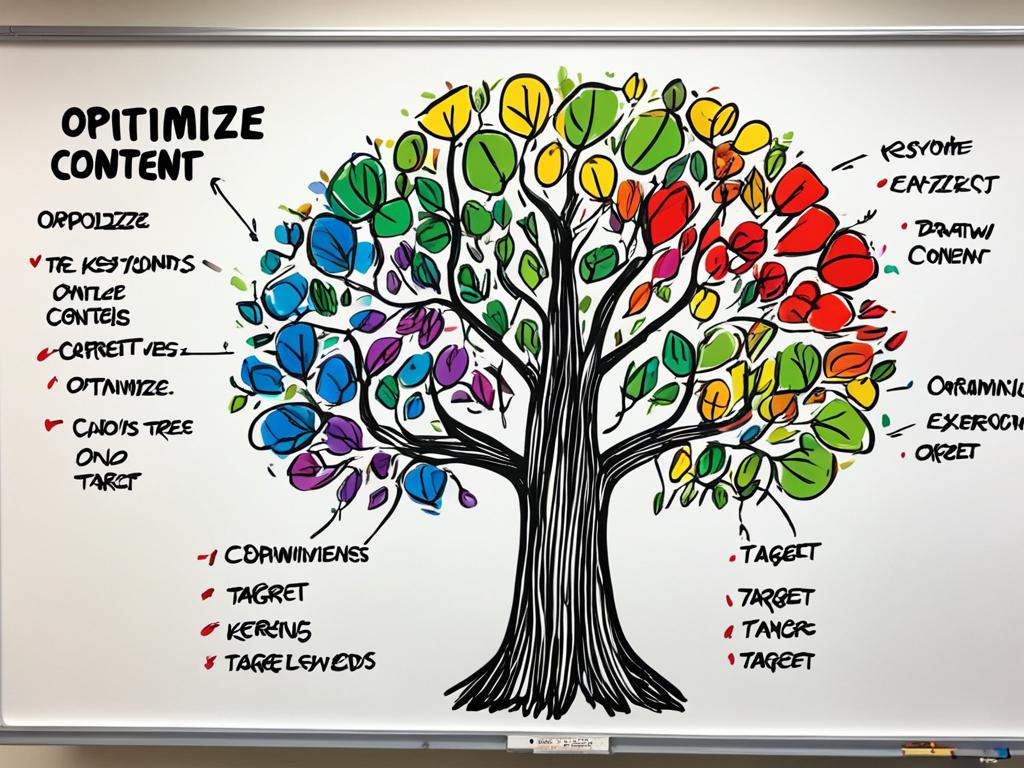
Optimize Content for Target Keywords
When it comes to creating SEO-friendly content, keyword research is your secret weapon. By finding the keywords people are searching for and strategically incorporating them into your content, you can boost your website’s visibility and attract more organic traffic. But remember, relevancy is key. Your chosen keywords should align perfectly with your business and target audience.
The key to keyword research is understanding search intent. By getting inside the minds of your audience, you can create content that truly satisfies their needs. Whether they’re looking for information, solutions, or inspiration, your content should be informative, engaging, and tailored to their search intent.
To optimize your content for target keywords, focus on creating high-quality, valuable content that revolves around those keywords. This not only improves the chances of your content ranking higher in search results but also enhances the overall user experience. Here are some essential tips for creating SEO-friendly content:
- Optimize the above-the-fold section: Make sure your main keyword appears prominently in the headline, meta description, and within the first 100 words of your content. This helps search engines understand the topic of your content right from the start.
- Enhance user experience (UX): A positive user experience is crucial for both search engines and users. Simplify navigation, improve page load speed, and make sure your content is easy to read and visually appealing. Engage your audience with captivating images, videos, and interactive elements.
- Create enticing calls-to-action (CTAs): Guide your audience towards the desired action by including clear, persuasive CTAs throughout your content. Whether it’s encouraging them to sign up, make a purchase, or share your content, CTAs can help drive engagement and conversions.
- Avoid overwhelming text walls: Break up your content into digestible chunks with subheadings, bullet points, and paragraphs. This makes it easier for both users and search engines to scan and understand your content.
Remember, optimizing your content is an ongoing process. Continuously monitor keyword performance, analyze user engagement metrics, and make data-driven improvements to ensure your content remains relevant and impactful. Now, go forth and create content that not only captivates your audience but also conquers the search results!
Conclusion
Search engine optimisation (SEO) is the fuel that drives your website to success in the digital world. By implementing SEO best practices, you can skyrocket your website’s visibility and performance in search engine results pages (SERPs). This means more organic traffic coming your way, increased brand awareness, and a strong competitive edge.
SEO is all about making small but impactful modifications to your website to enhance the user experience and ensure search engines understand and present your content effectively. By optimising your website for relevant keywords and continuously refining your SEO strategy, you pave the way for higher rankings and attract a targeted audience. It’s a game-changer in the world of digital marketing.
With SEO, the possibilities are endless. You can tap into the vast potential of organic traffic, a vital source of quality visitors who are actively searching for what you offer. By investing in SEO, you lay a solid foundation for growth, expanding your reach, connecting with your audience, and ultimately achieving your business goals. So don’t wait, embrace the power of SEO and propel your website to new heights!
FAQ
What is search engine optimization (SEO)?
Search engine optimization (SEO) is the process of improving the visibility and performance of a website in search engine results pages (SERPs). It involves making changes to the website to make it more appealing to search engines and rank higher in organic search results.
Who is this guide for?
This guide is for anyone who owns, manages, monetizes, or promotes online content through Google Search. Whether you run a growing business, manage multiple websites, work in a web agency, or are a DIY SEO expert, this guide is meant to provide a complete overview of SEO basics and best practices.
What are the basics of SEO?
SEO involves making small modifications to various parts of a website to improve its user experience and performance in organic search results. While these individual changes may seem small, when combined with other optimizations, they can have a significant impact. SEO is focused on making a website valuable to both users and search engines, helping search engines understand and present the content effectively while providing a better experience for users.
How do I get started with SEO?
To get started with SEO, it is important to build a website that benefits users and optimizes its content to improve the user experience. While this guide does not promise automatic ranking on Google, following the best practices will make it easier for search engines to crawl, index, and understand your content.
How do I determine if my site is indexed by Google?
You can determine whether your site is indexed in Google by doing a site: search for your site’s home URL. This search will show the indexed pages for your site. If your site is not indexed, it could be due to reasons such as poor connectivity, recent launch, crawlability issues, errors, or blocked access.
Should I hire an SEO expert?
While this guide provides enough information to optimize your site, hiring an SEO professional can help you audit your pages and implement advanced strategies. SEO consultants can provide services such as reviewing site content, offering technical advice, developing content, managing online campaigns, conducting keyword research, providing SEO training, and having expertise in specific markets.
How can I help Google find my content?
To get your site on Google, it is important to make it easily discoverable. You can submit a sitemap, a file that tells search engines about new or changed pages on your site. This helps search engines understand the structure of your site and index your pages. In addition to submitting a sitemap, you can promote your site through links from other pages and encourage people to discover your content.
How can I avoid blocking sensitive content?
While robots.txt can instruct well-behaved crawlers not to crawl certain pages, it is not an effective way to stop sensitive or confidential content from being accessed. Robots.txt only prevents crawlers from accessing the pages but does not prevent the server from delivering the content if directly requested. To ensure sensitive content does not appear in search results, use the noindex tag.
How can I help Google and users understand my content?
Search intent plays a crucial role in ranking on search engines. Understanding the underlying reason why a person searches for a particular keyword helps create content that satisfies their intent. Google can determine if a page satisfies search intent and reward it with a higher ranking. User experience (UX) is also important as it affects how users engage with the site and how much time they spend on it.
How can I create an SEO-friendly hierarchical structure for my website?
Creating an SEO-friendly hierarchical structure for your website is crucial for improving its performance in search engine rankings. This includes organizing content in a logical flow, using appropriate headings and subheadings, and optimizing the structure for on-page SEO. The structure should be user-friendly, easy to navigate, and make it clear to search engines what the main topics and subtopics of the page are.
How do I optimize content for target keywords?
Keyword research is a critical step in creating SEO-friendly content. It involves finding the keywords that people search for and targeting them in your content. Relevancy is key when choosing keywords, ensuring they align with your business and audience. Creating high-quality, informative, and engaging content that is focused on target keywords improves its chances of ranking higher in search results.
What is the importance of SEO in digital marketing?
Search engine optimization is a critical aspect of digital marketing that focuses on improving website visibility and performance in search engine results pages. By implementing SEO best practices, businesses can drive more organic traffic, increase brand awareness, and gain a competitive advantage. SEO involves making small modifications to a website to enhance its user experience, optimize content for relevant keywords, and ensure search engines understand and present the content effectively.